
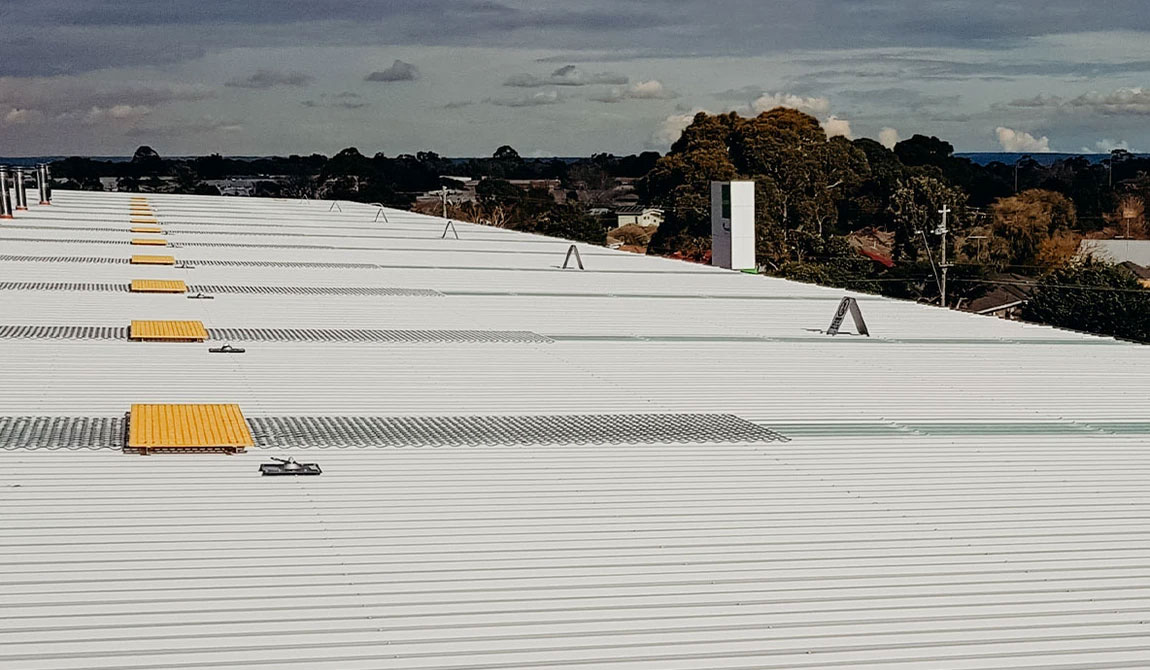
25 May The Hidden Risks of Skylights on Commercial Roofs
Skylights are one of the most overlooked hazards on commercial rooftops.
While they improve natural light inside buildings, they can also create serious fall risks for contractors, maintenance workers, and anyone accessing the roof.
Unfortunately, many skylights appear visually solid despite being unable to withstand the weight of a person.
This creates a dangerous situation where workers may unknowingly step onto fragile surfaces.
Why Skylights Are So Dangerous
One of the biggest risks with skylights is that they often blend into surrounding roofing materials.
Workers focused on maintenance tasks may:
- Misjudge the location of skylights
- Assume skylights are load-bearing
- Slip near fragile roof surfaces
- Accidentally step onto weakened materials
Even modern skylights can deteriorate over time due to:
- UV exposure
- Weather conditions
- Material aging
- Structural fatigue
Skylight Falls Can Be Severe
Falls through skylights frequently result in:
- Serious injuries
- Permanent disability
- Fatal incidents
Because skylights are often positioned above internal voids or hard surfaces, falls can involve significant drop distances.
Who Is Responsible for Skylight Safety?
Under New Zealand health and safety legislation, building owners and PCBUs have responsibilities to manage fall hazards.
If contractors or workers access a roof containing fragile surfaces, reasonable steps should be taken to reduce risk.
This may include:
- Installing skylight protection systems
- Providing guardrails
- Restricting unsafe access zones
- Installing walkways
- Conducting roof safety assessments
Common Skylight Protection Solutions
Skylight Guards
Protective mesh or cage systems can prevent falls through fragile surfaces.
Guardrails
Guardrails create separation between workers and skylight hazards.
Roof Walkways
Walkways guide workers safely around roof obstacles.
Static Line Systems
These systems allow workers to remain connected while moving across rooftops.
Why Temporary Warnings Are Not Enough
Some buildings rely solely on signage or painted markings around skylights.
While warnings are useful, they should not be considered the primary control method.
Workers can become distracted, weather conditions can reduce visibility, and roof layouts may change over time.
Physical protection systems provide significantly greater safety.
Skylight Risks Increase During Maintenance Work
Commercial rooftops now require more frequent access than ever before.
This is driven by:
- HVAC servicing
- Solar maintenance
- Communications infrastructure
- Roof inspections
- Drainage maintenance
The more frequently contractors access roofs, the more important skylight protection becomes.
The Importance of Roof Safety Assessments
Many building owners are unaware their skylights create compliance risks.
A professional roof safety assessment can identify:
- Fragile roof zones
- Unsafe access routes
- Missing protection systems
- Non-compliant areas
- Opportunities for improved safety
Final Thoughts
Skylights remain one of the most serious hidden hazards on commercial roofs.
Without proper protection systems, even routine maintenance work can become high risk.
Protecting skylights is not just about compliance. It’s about ensuring workers can safely access rooftops without unnecessary exposure to preventable fall hazards.