
21 May Does Your Commercial Building Need a Roof Access System?
Commercial rooftops are no longer accessed occasionally.
Today, roofs regularly house HVAC systems, solar panels, communications equipment, drainage infrastructure, and maintenance zones that require ongoing servicing.
Yet many buildings still rely on unsafe or outdated access methods.
If contractors or maintenance teams need to access your roof, a compliant roof access system may not just be recommended – it could be essential.
What Is a Roof Access System?
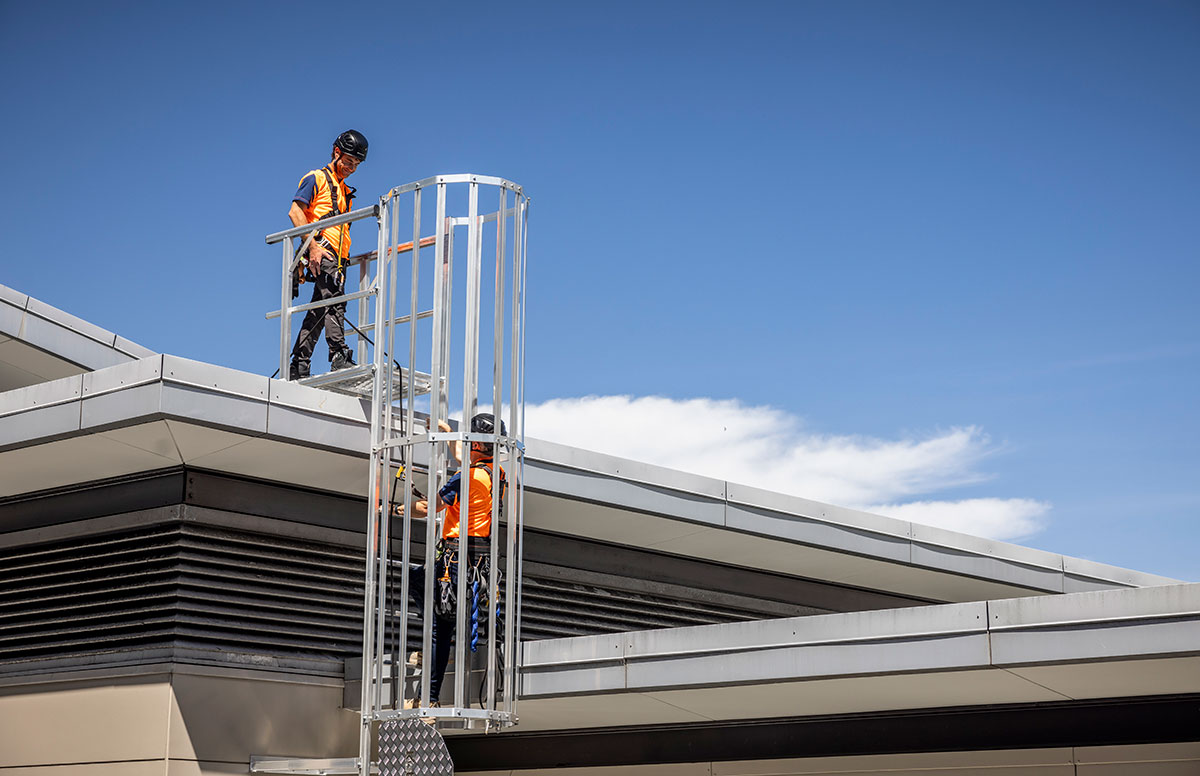
A roof access system is designed to provide safe, compliant access to elevated roof areas.
These systems may include:
- Fixed ladders
- Roof walkways
- Guardrails
- Static lines
- Anchor points
- Access hatches
- Platforms
- Step systems
The right solution depends on the building layout, roof type, frequency of access, and risk profile.
Why Roof Access Safety Matters
Falls remain one of the leading causes of serious workplace injuries.
Even routine maintenance tasks can become high-risk if workers are accessing roofs without proper safety systems.
Common rooftop hazards include:
- Fragile roofing materials
- Skylights
- Slippery surfaces
- Roof edges
- Uneven levels
- Weather exposure
- Poor access points
Without compliant systems in place, both workers and building owners can be exposed to significant risk.
Signs Your Building May Need a Roof Access System
Your building may require a formal height safety solution if:
- Contractors access the roof regularly
- HVAC systems are installed on the roof
- Solar systems require servicing
- Workers use portable ladders for roof access
- There are exposed roof edges
- Skylights are present
- Existing anchor systems are outdated
- Maintenance teams cross unsafe roof areas
Even infrequent roof access can require safety controls depending on the level of risk.
The Legal Responsibilities of Building Owners
Under New Zealand health and safety legislation, PCBUs and building owners have responsibilities to manage workplace risks.
This includes ensuring safe access for:
- Employees
- Contractors
- Maintenance providers
- Inspectors
- Service technicians
A lack of compliant roof access systems can increase exposure to:
- Workplace incidents
- WorkSafe investigations
- Liability claims
- Operational disruption
Permanent vs Temporary Access Solutions
Some buildings rely on temporary safety systems for occasional access.
However, permanent systems are often more effective for buildings with ongoing maintenance requirements.
Permanent systems offer:
- Faster access
- Reduced setup time
- Improved safety consistency
- Better long-term compliance
- Lower risk exposure
These systems are especially valuable for:
- Commercial buildings
- Industrial facilities
- Warehouses
- Schools
- Healthcare facilities
- Retail centres
Roof Access Systems Improve Maintenance Efficiency
A compliant roof access system does more than improve safety.
It also allows contractors to complete maintenance work more efficiently.
When access is straightforward and safe:
- Maintenance is completed faster
- Contractors spend less time setting up temporary systems
- Building downtime is reduced
- Servicing costs may decrease over time
The Importance of System Design
Every roof presents different risks.
An effective system should be tailored to the building’s:
- Roof pitch
- Layout
- Equipment placement
- Access frequency
- Maintenance requirements
- Existing hazards
Professional design and assessment help ensure the system is practical, compliant, and suitable for long-term use.
Final Thoughts
If your commercial building requires rooftop access, relying on temporary or outdated methods can create unnecessary risk.
Modern roof access systems help protect workers, simplify compliance, and support safer long-term building maintenance.
A professional roof safety assessment can help determine the most effective solution for your building and identify any areas of non-compliance before they become larger issues.