
22 May Permanent vs Temporary Height Safety Systems – Which Is Better?
When planning rooftop safety solutions, one of the most common questions building owners ask is whether temporary or permanent systems are the better option.
The answer depends on several factors including:
- Frequency of roof access
- Building layout
- Maintenance requirements
- Budget considerations
- Risk exposure
Both systems play an important role in height safety, but understanding the differences is essential when choosing the right long-term solution.
What Are Temporary Height Safety Systems?
Temporary systems are installed or used only when access is required.
Examples include:
- Portable anchor systems
- Temporary lifelines
- Mobile edge protection
- Portable ladders
- Temporary harness systems
These systems are often used for short-term projects or infrequent maintenance work.
Advantages of Temporary Systems
Temporary solutions may offer:
- Lower upfront costs
- Flexibility across multiple sites
- Short-term project suitability
- Reduced permanent roof modifications
For buildings requiring very occasional access, temporary systems may sometimes be appropriate.
Limitations of Temporary Systems
However, temporary systems also create challenges.
They often require:
- Additional setup time
- More worker training
- Increased reliance on human behaviour
- Repeated installation processes
- Ongoing equipment management
Improper setup or inconsistent use can increase risk exposure.
What Are Permanent Height Safety Systems?
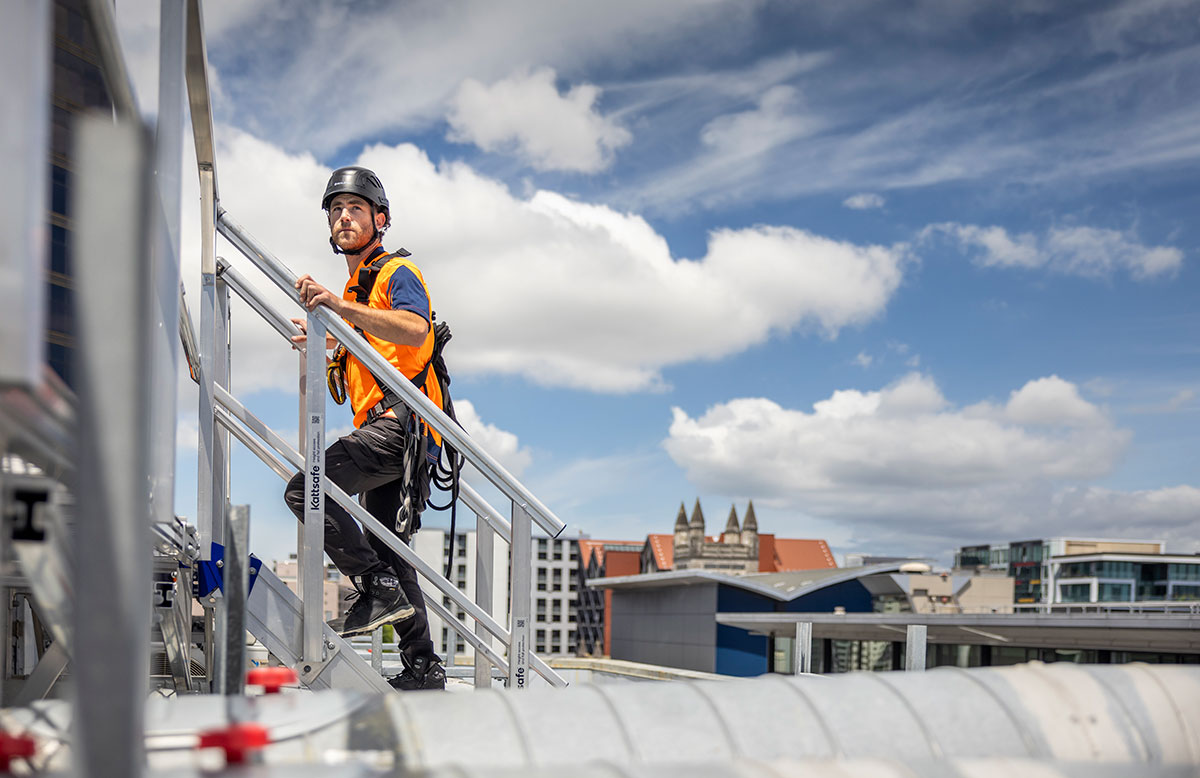
Permanent systems are fixed safety solutions designed for ongoing rooftop access.
Examples include:
- Guardrails
- Roof walkways
- Static line systems
- Fixed anchor points
- Access ladders
- Safety gates
These systems remain in place continuously and are designed specifically around the building’s layout and maintenance requirements.
Advantages of Permanent Systems
Permanent systems offer several long-term benefits.
Improved Safety
Workers have consistent access to compliant safety infrastructure.
Faster Access
Maintenance teams spend less time setting up temporary equipment.
Better Compliance
Permanent systems help create more predictable and controlled access environments.
Long-Term Cost Efficiency
Although upfront costs may be higher, permanent systems can reduce ongoing labour and setup expenses.
Which Buildings Benefit Most From Permanent Systems?
Permanent systems are often ideal for buildings with:
- Frequent HVAC servicing
- Solar infrastructure
- Ongoing maintenance schedules
- Multiple contractors accessing rooftops
- Large or complex roof layouts
As rooftop equipment continues increasing, permanent systems are becoming far more common across commercial buildings.
The Importance of System Design
Choosing the right system is not just about compliance.
An effective solution should also consider:
- Worker movement
- Future maintenance needs
- Roof traffic patterns
- Existing hazards
- Ease of use
Poorly designed systems can reduce efficiency and create ongoing frustrations for contractors.
Why Many Buildings Use Both
In many cases, the most effective approach combines permanent and temporary systems.
For example:
- Permanent guardrails may protect roof edges
- Temporary systems may support specialised maintenance work
A tailored solution often provides the best balance between safety, practicality, and cost.
Final Thoughts
There is no one-size-fits-all solution when it comes to height safety.
The right approach depends on how your building is used and how frequently workers require rooftop access.
For many commercial properties, permanent systems provide stronger long-term safety outcomes while improving maintenance efficiency and reducing operational risk.