
18 Jul Rope Access vs. Scaffolding vs. EWP: Which Is Right for Your Building?
When a commercial building needs work at height — whether it’s a window clean, a building wash, or a repair job — there’s usually more than one way to get someone up there safely. The three most common methods in New Zealand are rope access, scaffolding, and elevated work platforms (EWPs, also known as cherry pickers or scissor lifts). Each has its place, and the right choice depends on the building, the job, and the budget.
Rope Access
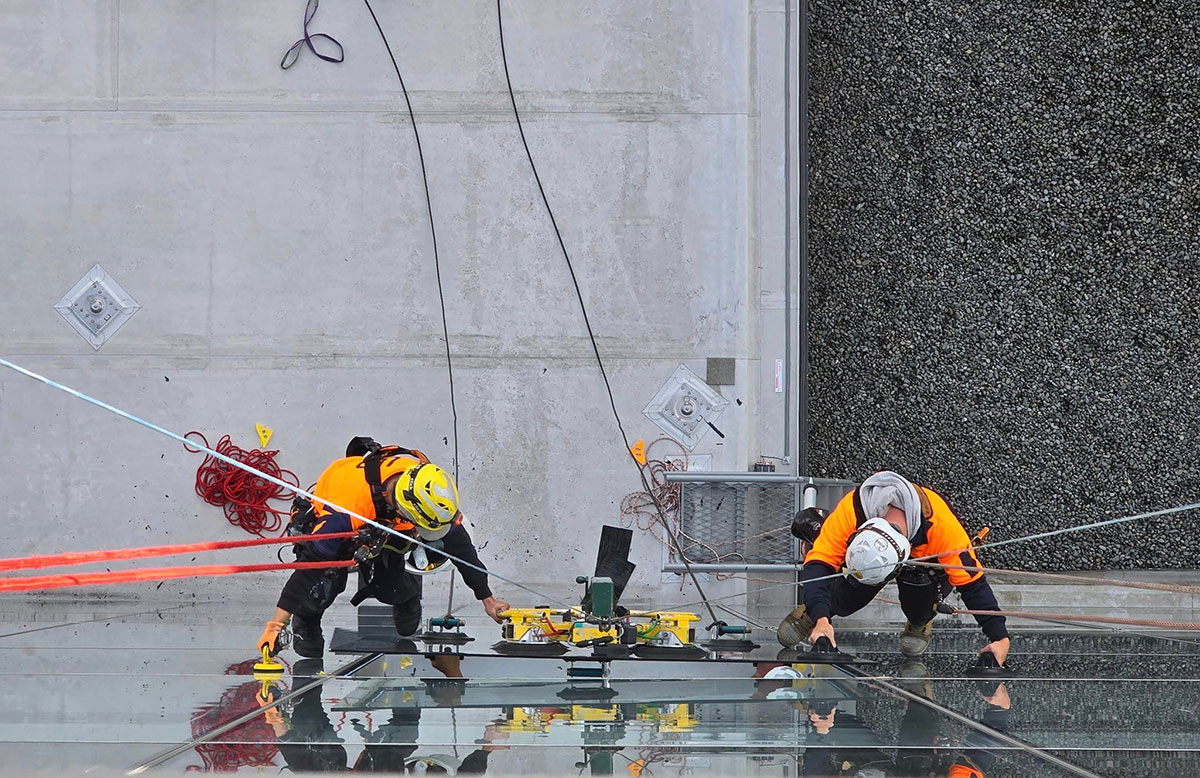
Rope access uses abseiling techniques, originally developed for industrial and rescue settings, to get trained technicians to almost any point on a structure. It’s the method Goleman was built on back in 1993, and for good reason — it’s fast to set up, requires minimal ground space, and can reach areas that are awkward or impossible for other methods, like building facades with complex angles, parapets, or sites with limited street access.
Best for: High-rise buildings, hard-to-reach facades, sites with restricted ground access, jobs that need to move across large vertical areas efficiently.
Trade-off: Requires highly trained, certified technicians and isn’t always the right fit for heavy equipment or materials.
Scaffolding
Scaffolding remains a reliable, stable platform for longer-duration projects, especially where multiple trades need access to the same area over an extended period — think repainting, recladding, or major repair work.
Best for: Extended projects, jobs needing a stable working platform for tools and materials, situations where multiple people need to work in the same spot simultaneously.
Trade-off: Slower and more expensive to erect and dismantle, and it occupies ground space and can affect building access for longer periods.
Elevated Work Platforms (EWPs)
EWPs are ideal where there’s good ground access and the job is relatively short. They get a technician (or two) up quickly without the setup time of scaffolding.
Best for: Jobs with clear ground access, shorter-duration tasks, situations where speed and mobility matter more than reach into tight spaces.
Trade-off: Limited by ground conditions and obstacles — not much use where there’s no clear space to position the machine, or where the building shape makes reach difficult.
So Which One Is Right for You?
In practice, the best contractors don’t default to one method — they assess the job and pick (or combine) whichever approach gets the work done safely, efficiently, and with the least disruption to your tenants and visitors. A building wash on a high-rise tower with restricted street frontage might call for rope access. A multi-week recladding project might need scaffolding. A quick gutter clean on a low-rise building with open access might be best suited to an EWP.
At Goleman, our technicians are trained and certified across rope access, scaffolding coordination, and EWP operation, so the method is chosen to suit the job — not the other way around. If you’re planning maintenance or cleaning work and aren’t sure what access method makes sense for your building, get in touch for a free site assessment and we’ll recommend the right approach.