
04 Sep Silo Cleaning 101: Why Grain, Flour, and Feed Silos Need Specialist Care
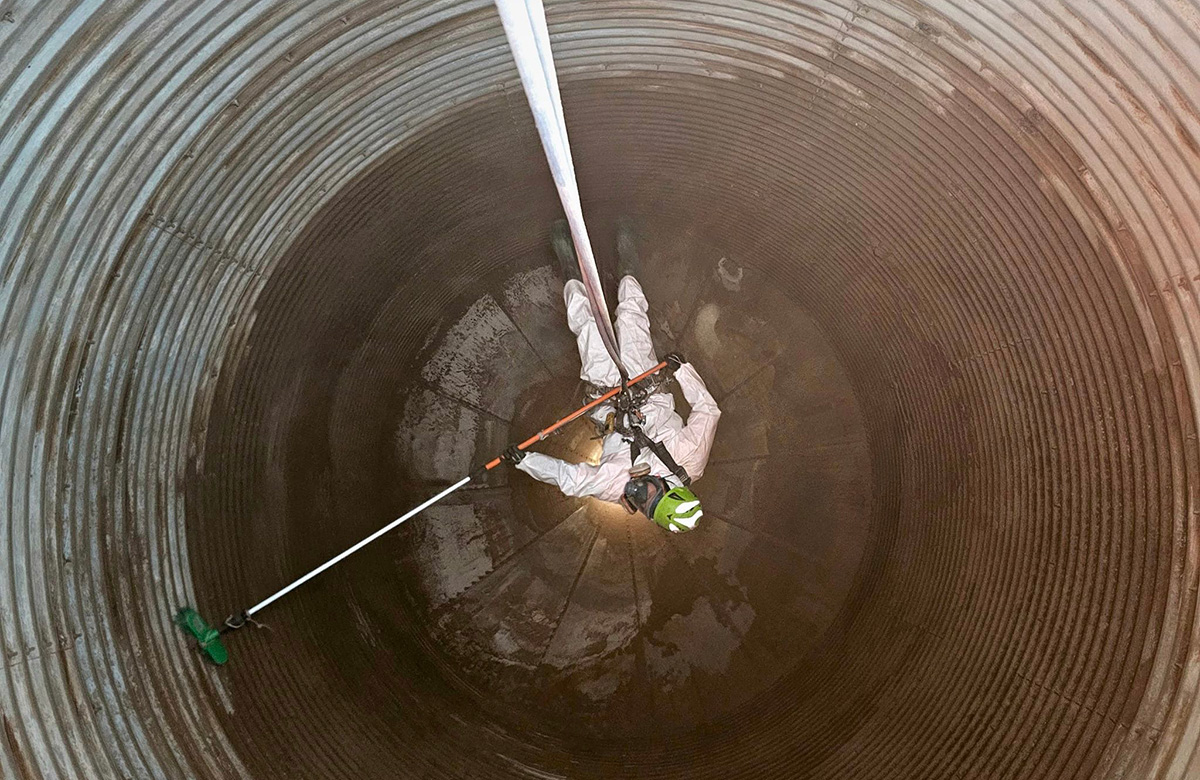
Silos are easy to overlook in a maintenance plan simply because they’re out of sight and built to hold up — but grain, flour, feed, and pet food silos all need regular, specialist cleaning to operate safely and protect product quality.
Why Silo Cleaning Is Different from Standard Building Maintenance
Silos present a unique combination of challenges:
- Confined space entry, requiring specific training, atmospheric monitoring, and safety protocols that go well beyond general height access work.
- Product residue buildup, where flour, grain, or feed residue accumulates on internal walls and in corners, creating contamination risk for future product batches.
- Dust explosion risk, particularly with flour and fine grain dust, which can become a serious hazard if not managed correctly during cleaning.
- Structural inspection needs, since internal cleaning is often the only opportunity to properly inspect walls, welds, and fittings for wear or damage.
- Descaling requirements, where built-up residue hardens over time and needs more than a simple wash to remove safely.
What’s Involved in a Professional Silo Clean
- Risk assessment and atmospheric testing before any confined space entry, to confirm safe oxygen levels and identify any hazardous buildup of dust or gas.
- Permit-to-work processes, documenting who’s entering, the hazards present, and the controls in place — standard practice for confined space work in New Zealand.
- Residue and debris removal, using methods suited to the product (grain, flour, feed, or pet food residue all behave differently and need different approaches).
- Descaling, for buildup that has hardened against silo walls over time.
- Internal inspection, checking for corrosion, structural wear, or damage that wouldn’t be visible from outside.
- Waste removal and disposal, handled in line with relevant regulations.
Why This Matters for Food and Feed Safety
For grain, flour, and feed operators, silo cleanliness is directly tied to product quality and food safety compliance. Residue buildup can harbour pests, mould, and contamination risks that affect the next batch stored in the silo — making regular cleaning a quality assurance issue as much as a maintenance one.
The Risk of DIY or Inexperienced Silo Entry
Confined space entry is one of the higher-risk activities covered under New Zealand’s health and safety legislation. Untrained entry into a silo — even briefly — can expose workers to atmospheric hazards, engulfment risk from residual product, or structural collapse of bridged material. This isn’t a job for general maintenance staff without specific training and equipment.
Goleman’s Silo Cleaning Capability
Goleman provides specialist silo cleaning for concrete silos, grain silos, flour silos, and pet food silos, alongside water tank entry services, using trained and certified confined space technicians. If your facility has silos due for cleaning or inspection, get in touch for a free assessment of what’s needed.