
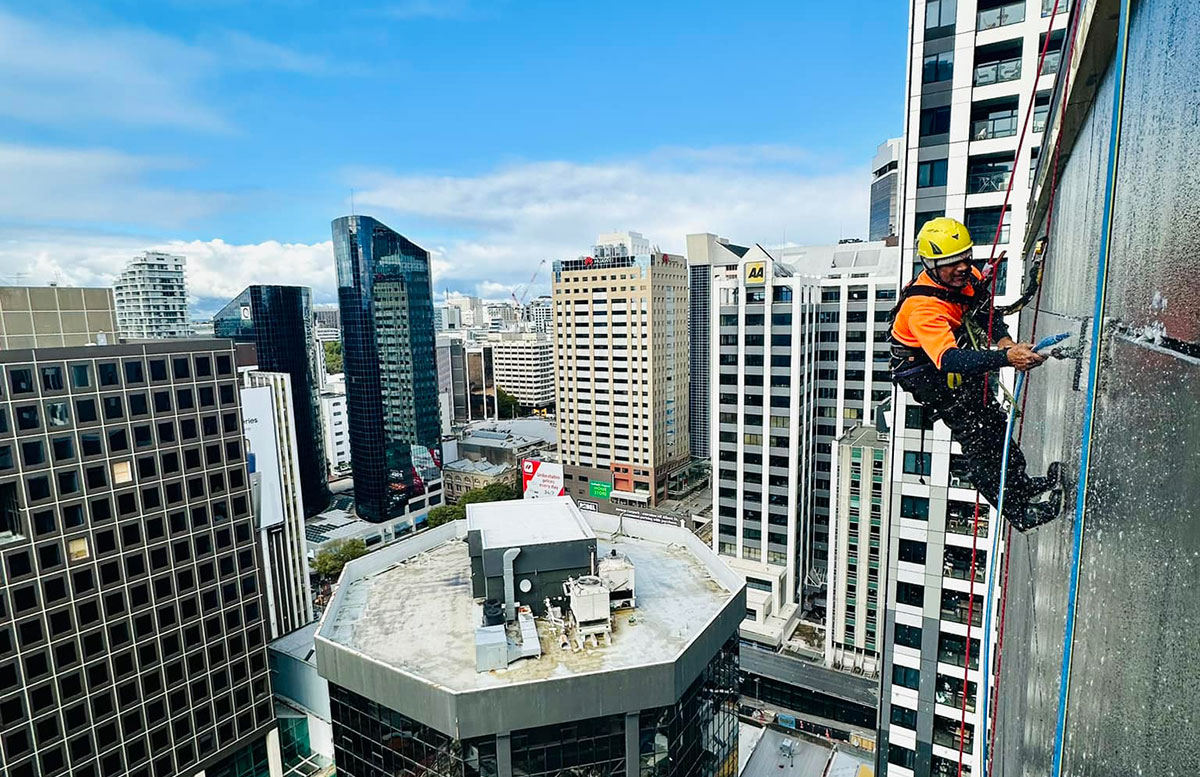
26 Jul What is Height Safety Compliance? And What Does it Mean for NZ Property Owners?
Any building that requires regular maintenance at height — window cleaning, gutter clearing, roof work, building washing — comes with an obligation to manage that risk properly. In New Zealand, this falls under the Health and Safety at Work Act 2015, and it applies not just to the contractors doing the work, but to property owners and managers who engage them (or who have height-access infrastructure installed on their buildings).
Why it Matters Beyond “Ticking a Box”
Falls from height remain one of the leading causes of serious workplace injury in New Zealand. For property owners, height safety compliance isn’t just about avoiding penalties — it’s about ensuring that anyone working on your building, whether your own staff or a contractor, goes home safe. It also protects you from liability if something goes wrong.
What Compliance Typically Involves
- Risk assessment of all areas requiring access at height, including identifying fall hazards before work begins.
- Appropriate access systems — this might mean permanent anchor points, static lines, or guardrails installed on the building, designed and certified to current standards.
- Regular inspection and certification of any installed height safety equipment, since fall protection systems degrade over time and need recertification.
- Working with certified contractors who hold the right training (rope access certification, EWP licences, confined space training where relevant) and who carry appropriate insurance.
- Documented safe work procedures for any height-access work carried out on the property.
What This Means if You Own or Manage a Commercial Building
If your building has window cleaning, roof access, or any other height-related maintenance need, it’s worth knowing:
- Permanent anchor points should be designed and installed by certified specialists — not retrofitted as an afterthought. Poorly designed systems can create a false sense of safety.
- Anchor points and fall protection systems need periodic recertification, typically every 12 months, to confirm they’re still fit for purpose.
- Your maintenance contractor’s safety credentials matter. Ask for evidence of training, certification, and a documented health and safety system — not just a verbal assurance.
- You carry some of the risk too. As the building owner or “PCBU” (person conducting a business or undertaking) in many cases, you have duties under the Act to ensure the systems on your property are safe for people to use.
How Goleman Approaches Height Safety
Height safety is the foundation Goleman was built on. As New Zealand’s largest supplier and installer of Kattsafe access and fall protection systems, we design, inspect, install, and certify height safety systems to standards that exceed legislative minimums — not just meet them. Every technician we send to your site is trained and certified for the specific access method the job requires.
If you’re unsure whether your building’s height safety systems are compliant, or you don’t have any in place yet, we offer free site assessments to identify what’s needed and recommend a solution that keeps your people, your contractors, and your building protected.