
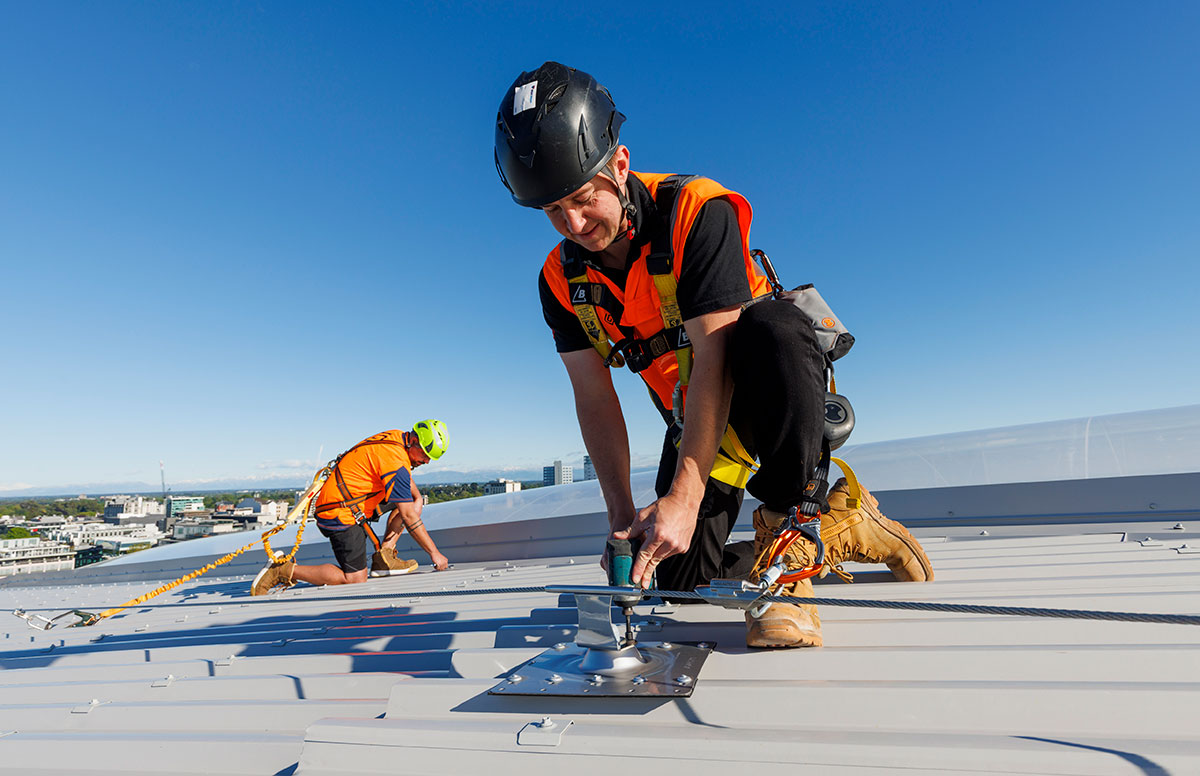
17 May The Complete Guide to Height Safety Systems in New Zealand
Commercial rooftops have changed dramatically over the past decade.
What was once considered occasional-access space now regularly houses HVAC systems, solar infrastructure, communications equipment, drainage systems, and essential building services that require ongoing maintenance.
As rooftop access increases, so does the importance of compliant height safety systems.
For building owners, facility managers, architects, contractors, and PCBUs, understanding height safety is no longer optional. It is a critical part of workplace safety, risk management, and long-term building compliance.
This guide explains the key components of height safety systems in New Zealand, how they work, why they matter, and what commercial property owners should consider when planning safe rooftop access.
What Are Height Safety Systems?
Height safety systems are designed to protect workers who access elevated areas where there is a risk of falling.
These systems help:
- Reduce fall risks
- Improve rooftop access safety
- Support legal compliance
- Protect contractors and workers
- Improve long-term maintenance efficiency
They are commonly installed on:
- Commercial buildings
- Warehouses
- Industrial facilities
- Schools
- Hospitals
- Retail centres
- Manufacturing plants
- Apartment complexes
Modern height safety systems are usually tailored specifically to the building layout, roof design, and maintenance requirements.
Why Height Safety Matters
Falls from height remain one of the leading causes of serious workplace injuries.
Even relatively low-height falls can result in:
- Serious injury
- Permanent disability
- Fatal incidents
- Operational disruption
- Legal liability
As buildings become more reliant on rooftop infrastructure, safe access becomes increasingly important.
Workers may need regular rooftop access for:
- HVAC maintenance
- Solar servicing
- Roof inspections
- Gutter maintenance
- Electrical work
- Communications equipment servicing
- Cleaning and maintenance
Without compliant systems in place, these routine tasks can create significant safety risks.
Read more – Does Your Commercial Building Need a Roof Access System?
Understanding New Zealand Height Safety Responsibilities
Under New Zealand health and safety legislation, PCBUs and building owners have responsibilities to manage risks associated with working at heights.
This includes ensuring:
- Safe access to rooftops
- Hazards are identified
- Risks are controlled
- Systems are maintained
- Workers have appropriate safety measures available
Responsibility often extends beyond direct employees.
Contractors, maintenance technicians, and service providers accessing the roof may also rely on the building’s safety infrastructure.
Read more – Who Is Responsible for Roof Safety on Commercial Buildings?
The Hierarchy of Controls
Height safety systems are typically designed around the hierarchy of controls.
This approach prioritises:
- Eliminating hazards
- Isolating workers from hazards
- Minimising risks where hazards remain
In practical terms, passive fall prevention systems are generally preferred over systems that rely heavily on worker behaviour.
For example:
- Guardrails are usually preferred over harness-only systems
- Permanent walkways are preferred over unprotected roof movement
- Fixed access systems are often safer than temporary ladders
Fall Prevention vs Fall Arrest
Understanding the difference between fall prevention and fall arrest is essential.
What Is Fall Prevention?
Fall prevention systems stop workers from reaching fall hazards.
Examples include:
- Guardrails
- Roof edge barriers
- Walkways
- Safety gates
- Fixed platforms
These systems are often considered the safest option because they physically separate workers from hazards.
What Is Fall Arrest?
Fall arrest systems reduce injury if a fall occurs.
Examples include:
- Static lines
- Anchor points
- Harness systems
- Horizontal lifelines
- Energy absorbers
Workers using fall arrest systems may still be exposed to fall hazards, but the system aims to reduce injury severity.
Many commercial buildings use a combination of both approaches.
Common Types of Height Safety Systems
Guardrail Systems
Guardrails provide passive edge protection around rooftops, platforms, and elevated work zones.
Benefits include:
- Continuous protection
- Reduced reliance on PPE
- Safer movement around rooftops
- Lower training requirements
Guardrails are commonly used around:
- Roof perimeters
- Plant equipment
- Access hatches
- Fragile roof zones
Roof Walkways
Walkways create designated safe access paths across rooftops.
These systems help:
- Protect roofing materials
- Guide worker movement
- Reduce slip risks
- Improve maintenance access
Walkways are particularly useful on:
- Large commercial roofs
- Membrane roofing systems
- Rooftops with multiple service areas
Static Line Systems
Static line systems allow workers to remain connected while moving across rooftops.
These systems are commonly used where:
- Guardrails are impractical
- Workers require mobility
- Rooftop layouts are complex
Static lines require:
- Proper system design
- Worker training
- Regular inspections
- Ongoing certification
Anchor Points
Anchor points provide secure attachment locations for harness systems.
They are commonly installed for:
- Roof maintenance
- Window cleaning
- Façade access
- Specialist maintenance work
Anchor systems should always be:
- Professionally installed
- Load rated
- Regularly inspected
- Certified for ongoing use
Fixed Access Ladders
Fixed ladders provide safer rooftop access compared with temporary ladders.
Modern systems may include:
- Safety cages
- Ladder brackets
- Step-through access
- Safety gates
Proper ladder design improves both safety and maintenance efficiency.
Skylight Protection Systems
Skylights remain one of the most overlooked rooftop hazards.
Many skylights appear solid but cannot safely support the weight of a person.
Protection systems may include:
- Skylight guards
- Guardrails
- Walkways
- Safety mesh systems
Protecting fragile surfaces is a critical part of rooftop risk management.
How Height Safety Systems Support Compliance
Height safety systems help building owners and PCBUs demonstrate proactive risk management.
Well-designed systems can support:
- Safer contractor access
- Reduced workplace risk
- Improved maintenance efficiency
- Easier compliance management
- Better long-term building operation
However, compliance is not achieved through installation alone.
Systems must also be:
- Maintained
- Inspected
- Certified
- Documented
See our related article – 5 Signs Your Building’s Height Safety System Is Non-Compliant.
How Often Should Height Safety Systems Be Inspected?
Most systems require regular inspections and recertification.
Annual inspections are commonly recommended for:
- Anchor systems
- Static lines
- Guardrails
- Walkways
- Access ladders
Inspections help identify:
- Corrosion
- Wear and tear
- Structural damage
- Non-compliant modifications
- System deterioration
Maintaining accurate inspection records is also important for compliance and liability management.
Read more – How Often Do Height Safety Systems Need to Be Inspected?
Common Height Safety Risks on Commercial Buildings
Many commercial buildings contain hidden risks that may not be obvious during routine maintenance.
Common hazards include:
- Fragile skylights
- Unprotected roof edges
- Unsafe access ladders
- Slippery roof surfaces
- Inadequate walkways
- Non-certified anchor systems
- Congested rooftop plant areas
Older buildings are particularly vulnerable because many were not originally designed for modern rooftop access demands.
The Best Roof Access Solutions for HVAC Maintenance
The Hidden Risks of Skylights on Commercial Roofs
Why Permanent Systems Are Becoming More Common
Commercial rooftops now require more frequent access than ever before.
As maintenance demands increase, many building owners are shifting toward permanent safety systems.
Permanent systems offer:
- Faster contractor access
- Improved safety consistency
- Reduced setup time
- Better long-term compliance
- Lower operational risk
Buildings with frequent HVAC servicing or rooftop infrastructure often benefit most from permanent solutions.
Designing Height Safety Systems for Long-Term Use
Effective height safety design goes beyond simple compliance.
A well-designed system should consider:
- Worker movement
- Maintenance frequency
- Roof layout
- Future building upgrades
- Contractor efficiency
- Existing hazards
Systems that are difficult to use may increase the likelihood workers avoid using them correctly.
Practicality and usability are critical.
Read more – What Architects Need to Know About Height Safety System Design
The Importance of Professional Assessments
Every commercial rooftop presents different risks.
Professional roof safety assessments help identify:
- Unsafe access areas
- Compliance gaps
- Existing hazards
- System upgrade opportunities
- Long-term safety improvements
These assessments are especially valuable for:
- Older buildings
- Buildings with increasing rooftop equipment
- Sites undergoing refurbishment
- Facilities with multiple contractors
Frequently Asked Questions About Height Safety Systems
What Is the Safest Type of Height Safety System?
Passive systems such as guardrails are generally considered the safest because they physically prevent falls and reduce reliance on worker behaviour.
For more information read Fall Prevention vs Fall Arrest – What’s the Difference?
Do Roof Anchor Points Need Annual Inspection?
Yes. Most anchor systems require regular inspection and recertification to ensure they remain compliant and safe for use.
For more information read How Often Do Height Safety Systems Need to Be Inspected?
Are Skylights Considered Fall Hazards?
Yes. Fragile skylights can create serious fall risks if they are not properly protected.
For more information read The Hidden Risks of Skylights on Commercial Roofs.
Who Is Responsible for Roof Safety?
Responsibility may involve building owners, PCBUs, contractors, and facility managers depending on the work being carried out and the building environment.
For more information read Who Is Responsible for Roof Safety on Commercial Buildings? and What Are the Legal Requirements for Working at Heights in New Zealand?
Are Permanent Height Safety Systems Worth It?
For buildings requiring ongoing rooftop access, permanent systems often improve safety, reduce setup time, and support long-term compliance.
For more information read Permanent vs Temporary Height Safety Systems – Which Is Better.
Final Thoughts
Height safety is no longer just a construction issue.
As commercial buildings become increasingly dependent on rooftop infrastructure, safe and compliant access systems are becoming essential for long-term building operation.
Well-designed height safety systems help protect workers, support compliance, reduce operational risk, and improve maintenance efficiency.
Whether upgrading an existing building or planning a new project, investing in professional height safety design helps create safer and more practical rooftop environments for years to come.